Best Temples in Ayutthaya: 7 Must-See Wats, Map and Route

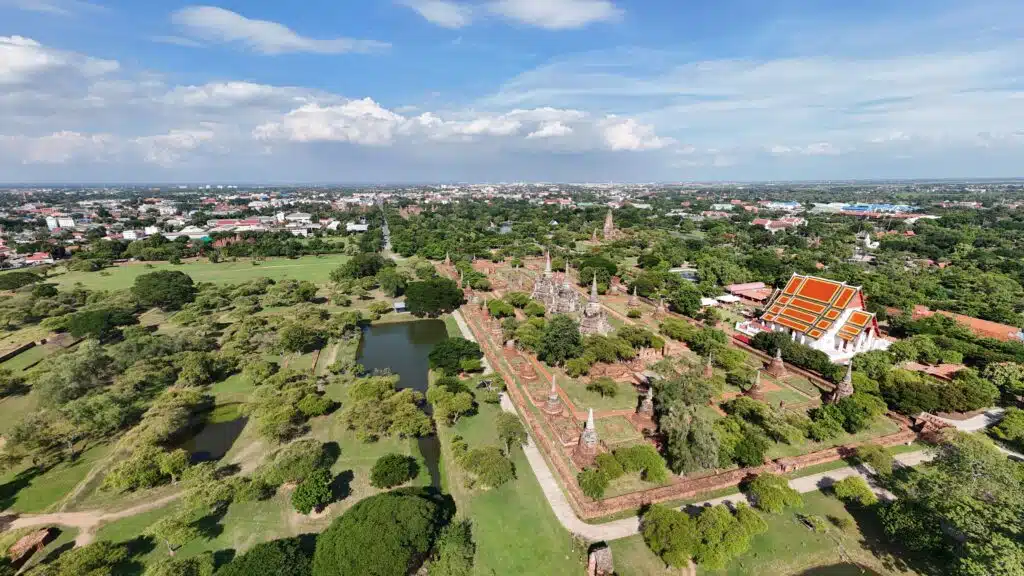
Ayutthaya has dozens of historic ruins and active Buddhist monasteries, but they are not contained in one small temple complex. The UNESCO World Heritage property covers 289 hectares, and several of the city’s most rewarding temples stand beyond the central island or on the opposite side of the river.
For a first visit, you do not need to see every wat. Choosing four or five well-matched temples usually creates a more enjoyable day than rushing through a long checklist in the heat.
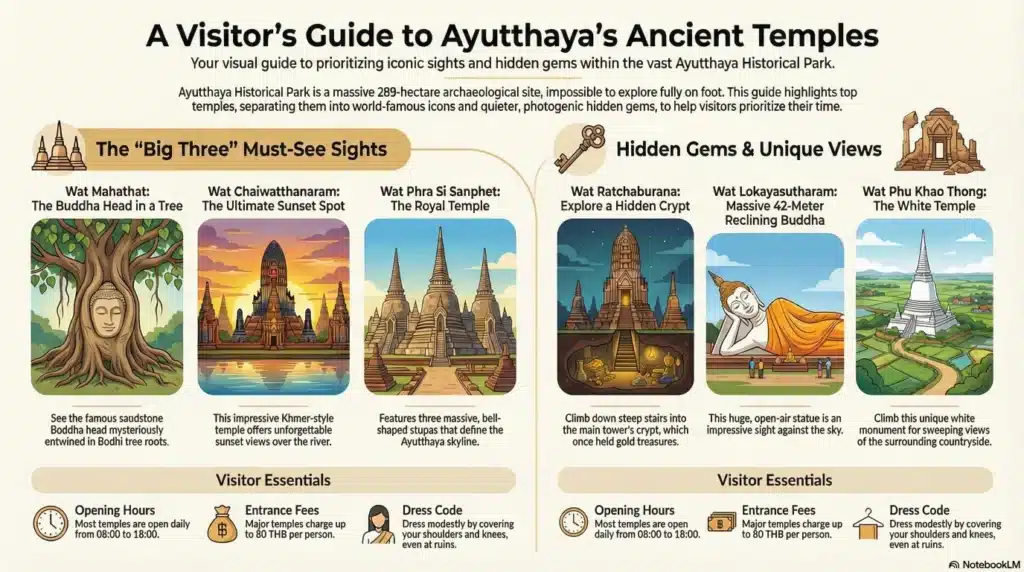
The three essential Ayutthaya temples for most first-time visitors are:
- Wat Mahathat for the famous Buddha head held by tree roots.
- Wat Phra Si Sanphet for the royal history and three iconic chedis.
- Wat Chaiwatthanaram for its grand riverside architecture and late-afternoon light.
Add Wat Ratchaburana if you enjoy archaeology, Wat Yai Chai Mongkhon to experience an active monastery, or Wat Phu Khao Thong for a quieter countryside setting. Prefer to concentrate on the history rather than organize tickets and transport? A private local tour can connect the temples in an order that suits your interests, pace, and available time.
The 7 Best Temples in Ayutthaya at a Glance
| Temple | Best for | Location | Suggested visit time |
|---|---|---|---|
| Wat Mahathat | Buddha head and iconic ruins | Central historical area | 45–60 minutes |
| Wat Ratchaburana | Prang, archaeology and royal history | Beside Wat Mahathat | 30–45 minutes |
| Wat Phra Si Sanphet | Royal history and three chedis | Former palace area | 45–60 minutes |
| Wat Chaiwatthanaram | Architecture and sunset light | West bank of the river | 45–60 minutes |
| Wat Yai Chai Mongkhon | Active monastery and giant chedi | Southeast of the island | Around 45 minutes |
| Wat Lokayasutharam | Open-air reclining Buddha | Western side of the island | 15–20 minutes |
| Wat Phu Khao Thong | Quiet surroundings and countryside views | Northwest of the city | 30–45 minutes |
Map of the Best Ayutthaya Temples
Here you can find Itinaries and Maps.
The temples can be divided into three practical groups:
- Central historical area: Wat Mahathat, Wat Ratchaburana and Wat Phra Si Sanphet
- Southern and western temples: Wat Yai Chai Mongkhon, Wat Lokayasutharam and Wat Chaiwatthanaram
- Northwestern detour: Wat Phu Khao Thong
Wat Mahathat and Wat Ratchaburana are easy to combine on foot. To visit all seven temples comfortably, you will need a bicycle, tuk-tuk, private car or van.
Recommended Ayutthaya Temple Routes
Best Half-Day Temple Route
For approximately three to four hours, prioritize:
- Wat Mahathat
- Wat Ratchaburana
- Wat Phra Si Sanphet
- Wat Chaiwatthanaram
This route includes Ayutthaya’s famous Buddha head, one of its best-preserved prangs, the former royal temple and the city’s most atmospheric late-afternoon temple. Wat Mahathat and Wat Ratchaburana are located close together. Wat Phra Si Sanphet is also within the central historical area. Wat Chaiwatthanaram is on the opposite side of the Chao Phraya River, so arrange a tuk-tuk, car or other transport rather than trying to complete the entire route on foot.
Best Full-Day Temple Route
For a more complete day, follow this route:
- Start at Wat Yai Chai Mongkhon
- Continue to Wat Mahathat
- Walk to Wat Ratchaburana
- Visit Wat Phra Si Sanphet
- Take a shaded lunch or museum break
- Stop at Wat Lokayasutharam
- Finish at Wat Chaiwatthanaram in the late afternoon
Wat Phu Khao Thong can replace Wat Lokayasutharam if you prefer a quieter temple and views across the countryside. Visiting all seven temples in one day is possible with efficient private transport. However, it leaves less time to appreciate the history, architecture and details of each site.
Wat Mahathat: The Famous Buddha Head in Tree Roots
Best for: First-time visitors, history and Ayutthaya’s most recognizable photograph
Wat Mahathat was one of the old capital’s most important religious complexes. Its name means “Temple of the Great Relic,” reflecting its role as a major royal monastery and sacred centre. The temple is now best known for the sandstone Buddha head held gently within the roots of a tree.
The exact story of how the head came to rest there is uncertain. However, the image has become one of the best-known symbols of Ayutthaya. Do not rush directly to the Buddha head and leave. Walk through the rest of the complex to see the remains of the central prang, leaning brick towers, smaller chedis and rows of damaged Buddha images. Together, the ruins help visitors understand the former scale of the monastery and the destruction that followed Ayutthaya’s fall in 1767.
Suggested visit time: 45–60 minutes
Best time to visit: Soon after opening
Local tip: Tour groups often gather around the Buddha head later in the morning.
When taking a photograph beside the Buddha head, crouch or kneel so that your head is not positioned above the Buddha image. Do not touch the Buddha head or the tree roots.
Wat Ratchaburana: The Royal Crypt and Towering Prang
Best for: Archaeology, architectural details and dramatic royal history
Wat Ratchaburana stands very close to Wat Mahathat, making the two temples easy to visit together. The monastery was founded in the 15th century on the cremation site of two royal brothers who died during a struggle for the throne. Its tall central prang is one of the best-preserved towers in Ayutthaya. Look closely at the surviving stucco details and guardian figures around the base rather than viewing the prang only from a distance.
Wat Ratchaburana is also known for its royal crypt. The crypt once contained gold objects, royal regalia and religious treasures. Many objects were stolen during a major looting, although some were later recovered. Recovered treasures from the site can be seen at the Chao Sam Phraya National Museum. Visitors may sometimes be able to descend into part of the crypt using narrow, steep stairs. Access may be restricted because of conservation work or safety conditions, so the crypt should be treated as a possible extra rather than a guaranteed part of the visit.
Suggested visit time: 30–45 minutes
Best time to visit: Morning or later afternoon
Local tip: Combine Wat Ratchaburana with Wat Mahathat because the entrances are only a short walk apart.
Wat Phra Si Sanphet: Ayutthaya’s Royal Temple
Best for: Royal history, classic Ayutthaya architecture and the three famous chedis
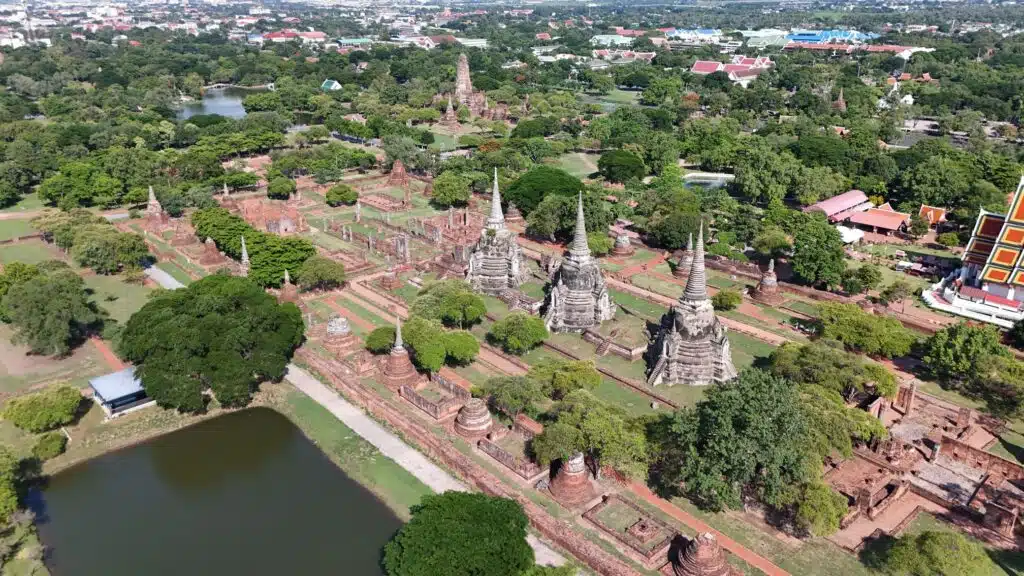
Wat Phra Si Sanphet stood within the former royal palace compound and served as the monarchy’s main ceremonial temple. Unlike an ordinary monastery, it did not house a permanent community of monks. Its most recognizable feature is a row of three large bell-shaped chedis associated with Ayutthaya kings. The symmetry of the three chedis creates one of the city’s most memorable views.
The temple once contained a large standing Buddha image covered with precious metal. It was damaged and stripped when Ayutthaya was destroyed in 1767. The surviving platforms, columns and foundations still help visitors imagine the scale of the former royal complex.
Suggested visit time: 45–60 minutes
Best time to visit: Morning
Local tip: Combine your visit with nearby Wihan Phra Mongkhon Bophit, which contains a large seated Buddha image.
There is little shade within the ruins, so bring water, a hat and sun protection.
Wat Chaiwatthanaram: The Best Temple for Late-Afternoon Light
Best for: Architecture, wide views and sunset photography
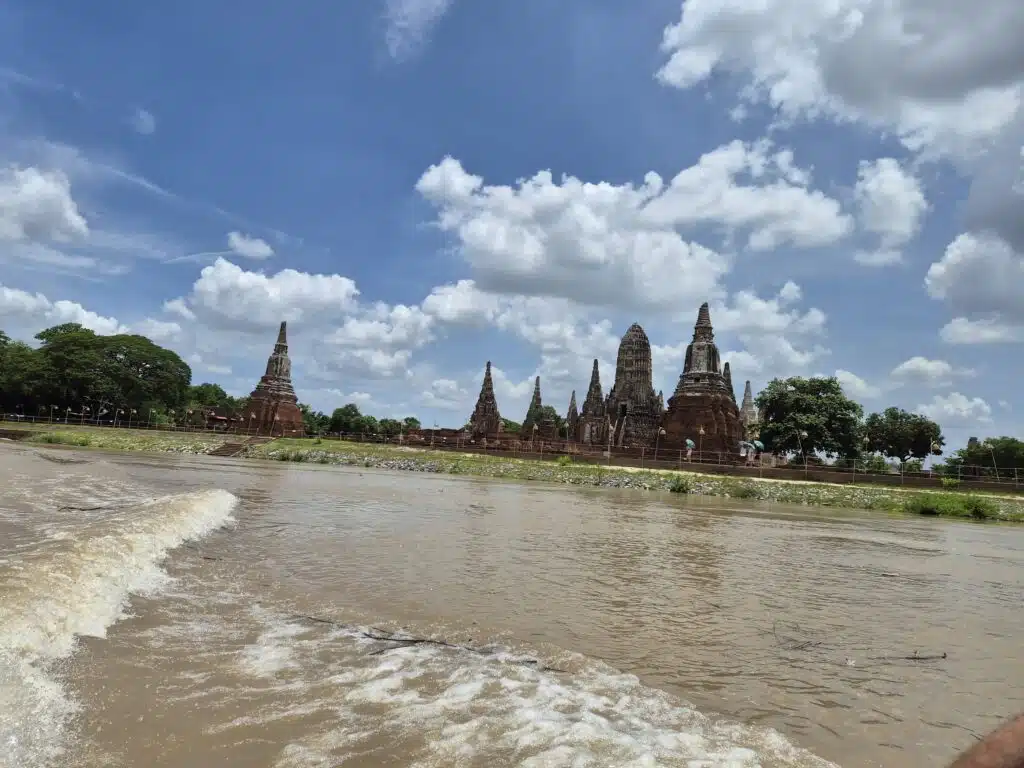
Wat Chaiwatthanaram stands on the west bank of the Chao Phraya River, outside the central island. King Prasat Thong founded the monastery in 1630. Its tall central prang and surrounding towers show strong Khmer-influenced architectural design. The complex is arranged around a raised central platform. Smaller towers and galleries create an impressive sense of symmetry and balance.
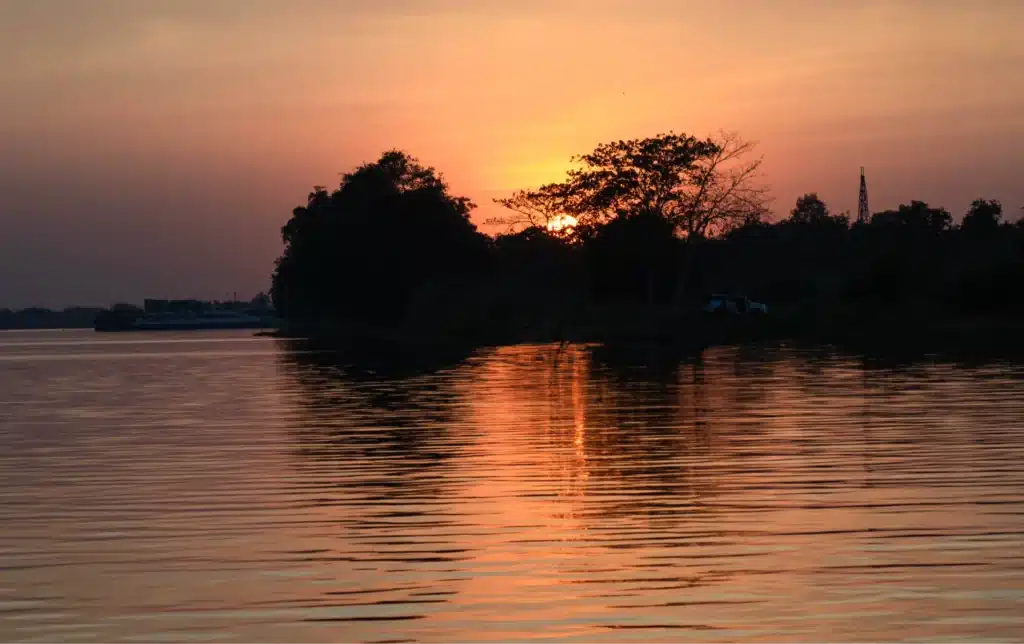
Wat Chaiwatthanaram is beautiful throughout the day, but its brickwork becomes especially atmospheric in warm late-afternoon light.
Suggested visit time: 45–60 minutes
Best time to visit: Late afternoon
Local tip: Arrive well before the published closing time. Last admission may be earlier, and sunset times change throughout the year.
Do not climb on fragile walls, chedis or restricted sections. Traditional Thai clothing is available from rental businesses near the temple. Clothing should remain respectful and should not obstruct other visitors. Wat Chaiwatthanaram can also be seen from the river during some Ayutthaya boat routes. However, viewing it from the water does not replace walking through the temple complex.
Wat Yai Chai Mongkhon: A Living Monastery With a Giant Chedi
Best for: Active Buddhist culture, Buddha statues and elevated views
Wat Yai Chai Mongkhon feels different from Ayutthaya’s central archaeological ruins because it remains an active Buddhist monastery. Visitors may see monks, local worshippers, offerings and religious activity alongside the historic structures. The main feature is a large bell-shaped chedi reached by steep steps. Rows of seated Buddha images dressed in saffron-coloured robes line the surrounding courtyard, creating one of Ayutthaya’s most recognizable views.
A reclining Buddha image can also be seen within the temple grounds.
Suggested visit time: Around 45 minutes
Best time to visit: Morning or late afternoon
Local tip: The steps leading up the chedi are steep. Hold the rail and take particular care when descending. Because this is an active place of worship, cover your shoulders and knees, remove your shoes where indicated and avoid walking directly in front of people who are praying.
Wat Lokayasutharam: Ayutthaya’s Open-Air Reclining Buddha
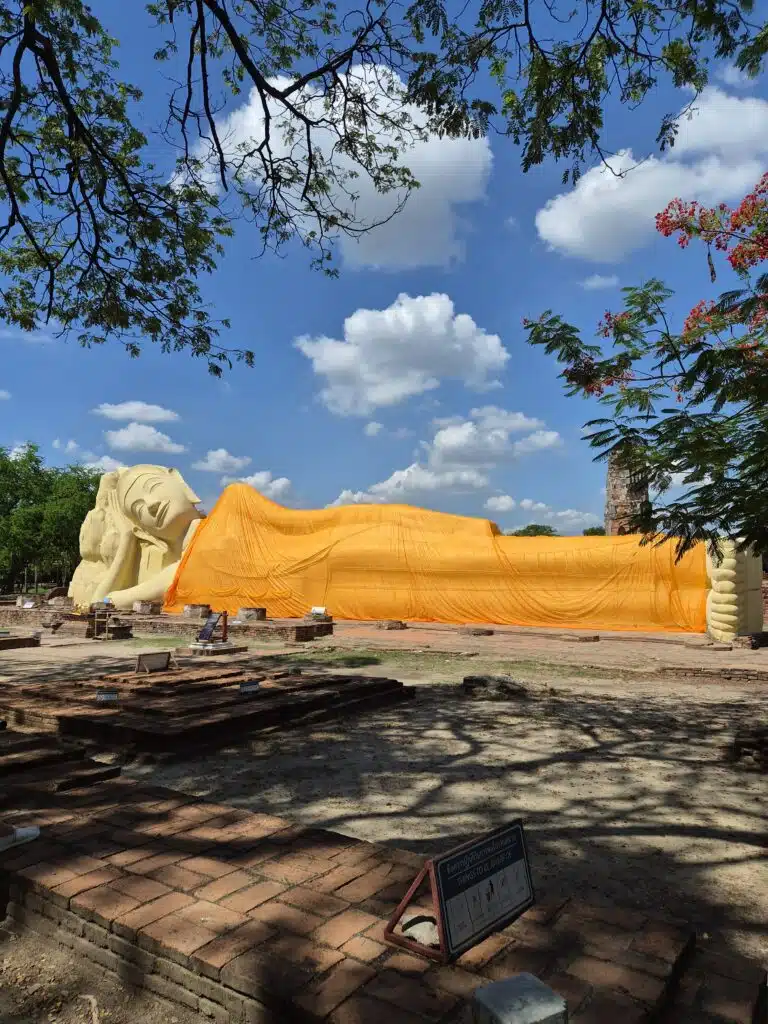
Best for: A short stop and a monumental Buddha image
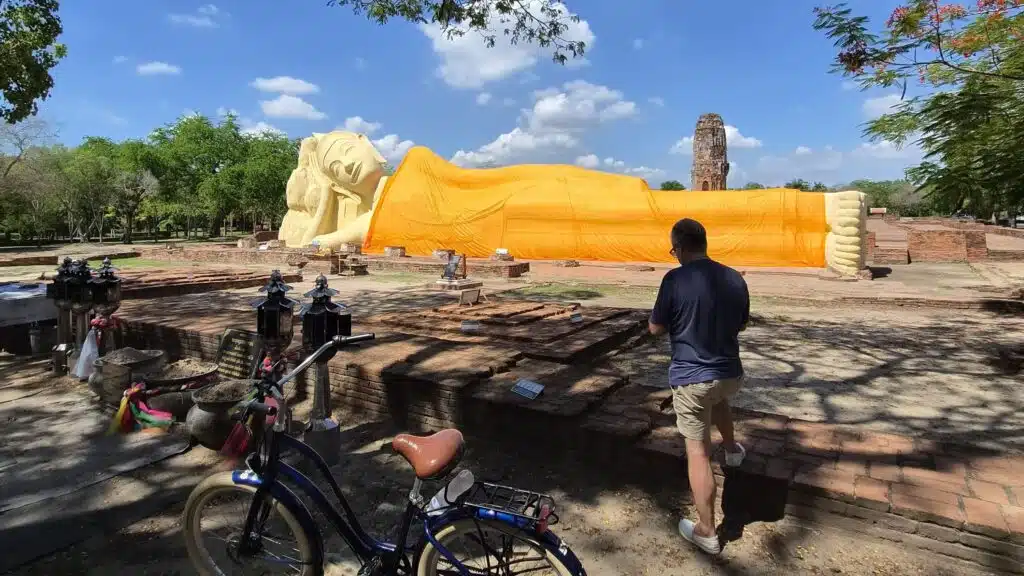
Wat Lokayasutharam is known for its large reclining Buddha, which rests in the open air among low brick remains. Only limited sections of the original monastery survive, so this is a much shorter visit than Wat Mahathat, Wat Phra Si Sanphet or Wat Chaiwatthanaram. The scale and peaceful expression of the Buddha still make it a worthwhile stop, especially when travelling through the western side of the historical island.
Suggested visit time: 15–20 minutes
Best time to visit: Early morning or late afternoon
Local tip: There is very little shade around the reclining Buddha. A midday visit can be extremely hot. Do not sit or climb on the statue or the surrounding historic structures. Keep a respectful distance from visitors making offerings.
Wat Phu Khao Thong: A Quiet White Chedi Above the Rice Fields
Best for: Fewer crowds, open landscapes and countryside views
Wat Phu Khao Thong stands northwest of the central historical area. Its tall white chedi rises above the surrounding countryside and looks very different from the red-brick ruins around Wat Mahathat and Wat Ratchaburana. The structure reflects several periods of construction and alteration connected with the historical conflicts between Ayutthaya and Burma. Its changing architectural form is part of what makes the monument historically interesting. When access is permitted, visitors can climb to an elevated terrace for views across the surrounding fields. Access to upper levels may change because of restoration work, weather conditions or safety restrictions.
Suggested visit time: 30–45 minutes
Best time to visit: Later afternoon
Local tip: Include Wat Phu Khao Thong only when you have suitable transport. It is not an efficient walking detour from the central ruins.
Additional Infos: Fees, Opening Hours,…
Ayutthaya Historical Park Entrance Fees
As of July 2026, the official admission prices for foreign visitors at Fine Arts Department-managed monuments are:
- Single-site ticket: 80 THB
- Seven-site combined ticket: 300 THB
The combined ticket covers:
- Wat Mahathat
- Wat Ratchaburana
- Wat Phra Ram
- Wat Phra Si Sanphet and the Royal Palace area
- Wat Chaiwatthanaram
- Wat Maheyong
- Wat Kudi Dao
Not every temple featured in this article is included in the combined ticket. Active monasteries and other historical sites may have separate entrance fees, donation systems or free admission. Entrance fees can change. Check the ticket office or official Ayutthaya Historical Park information before relying on a fixed travel budget.
Ayutthaya Temple Opening Hours
Opening hours vary between archaeological ruins and active monasteries. Major historical ruins generally open during the daytime, often from around 8:00 or 8:30 in the morning until approximately 6:00 or 6:30 in the evening.
Active temples may open earlier and close at different times. Special evening openings sometimes take place during seasonal events. However, these should not be assumed to operate every night.
Check the current opening time, closing time and last admission for the date of your visit.
Ayutthaya Temple Dress Code and Etiquette
Wear light, breathable clothing that covers your shoulders and knees, particularly when visiting active temples such as Wat Yai Chai Mongkhon. When visiting Ayutthaya’s ruins and monasteries:
- Do not climb on walls, chedis, Buddha images or restricted structures.
- Remove your shoes before entering prayer halls when signs or local practice indicate.
- Do not point the soles of your feet toward a Buddha image.
- Keep your voice low around worshippers.
- Ask before photographing monks at close range.
- Crouch when posing beside the Buddha head at Wat Mahathat.
- Do not touch statues, carvings, tree roots or fragile brickwork.
- Avoid blocking entrances or important viewpoints during long photo sessions.
A light scarf can be useful, but wearing suitable clothing from the beginning is easier than relying on a cover-up at every temple entrance.
How to Get Around the Ayutthaya Temples
Walking works well for the central group around Wat Mahathat, Wat Ratchaburana and the former royal palace area. It is not practical for most visitors to walk between all seven temples.
Bicycle
A bicycle provides independence and works well for reasonably fit visitors who are comfortable with heat and local traffic. Cycling is most suitable for the central island and nearby areas rather than an ambitious seven-temple itinerary. Wear a helmet where available, carry water and avoid the hottest part of the day.
Tuk-Tuk
A tuk-tuk is one of the easiest ways to connect the central ruins with riverside and off-island temples. Before starting, agree on:
- The temples you want to visit
- The approximate duration
- Waiting time at each stop
- The total price
- Where the journey will finish
Confirm whether the quoted price is for the whole vehicle or per person.
Private Car or Van
A private vehicle provides the greatest comfort for families, older visitors and anyone travelling from Bangkok. Air-conditioning between temple visits can make a significant difference during the hottest part of the day. Private transport is also useful when visiting outlying sites such as Wat Phu Khao Thong.
Private Local Guide
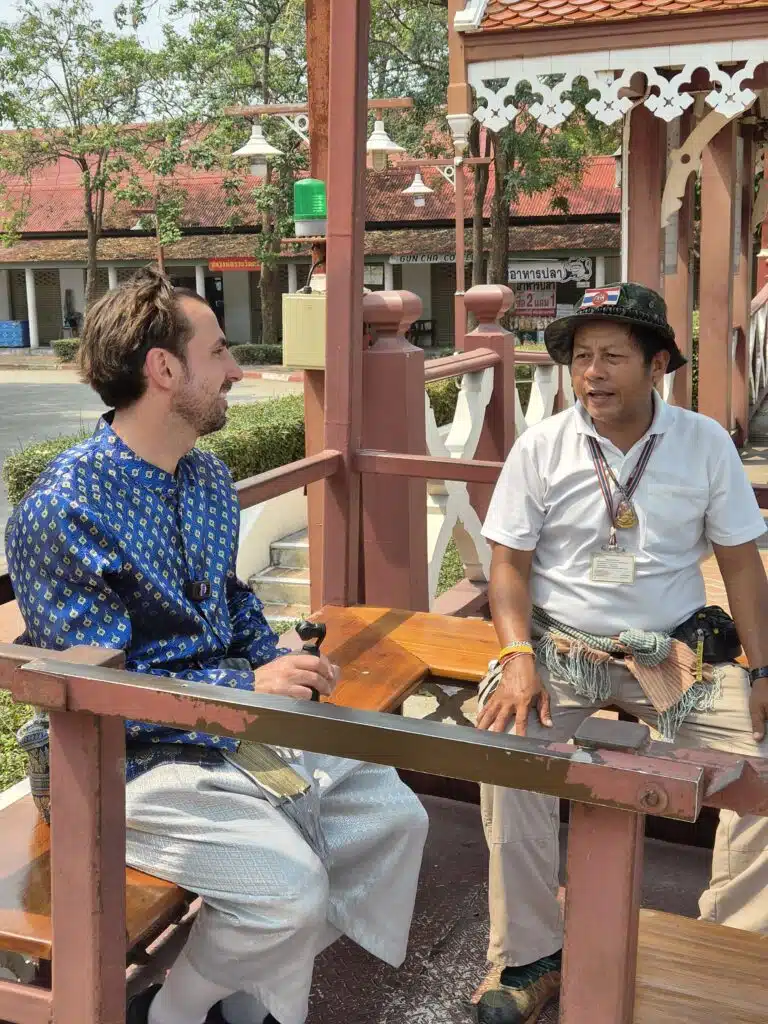
You do not need a guide to enter the temples, but the ruins contain few surviving interiors and limited interpretation. A knowledgeable local guide can explain:
- How the temples were originally used
- Why the architecture differs between sites
- How the royal palace and religious areas were connected
- What happened during Ayutthaya’s rise and destruction
- Which details are easy to overlook without explanation
A guide can also help create a realistic route based on your available time, mobility, photography interests or family needs.
Accessibility, Heat and Practical Comfort
Many Ayutthaya temple ruins have uneven brick paths, exposed ground, steep stairs and limited shade. The crypt stairs at Wat Ratchaburana, the chedi at Wat Yai Chai Mongkhon and the upper sections of Wat Phu Khao Thong may not be suitable for visitors with limited mobility.
A less physically demanding route can focus on accessible viewpoints at:
- Wat Mahathat
- Wat Phra Si Sanphet
- Wat Lokayasutharam
- Selected areas of Wat Chaiwatthanaram
Conditions can change because of restoration work and weather.
Carry:
- Drinking water
- Sunscreen
- A hat
- Comfortable footwear with stable soles
- Lightweight clothing that covers shoulders and knees
A shaded lunch or museum break around midday is usually more comfortable than walking continuously through exposed ruins.
FAQ: About Ayutthaya Temples
Explore Ayutthaya With a Local Guide
Ayutthaya’s temples become much easier to understand when you can connect the ruins with the people, ceremonies, royal conflicts and international trade that shaped the old capital. A private Ayutthaya tour can combine a local guide with tuk-tuk or private vehicle transport. The route can be adjusted to your interests, pace and available time. Your visit can focus on:
- Major historical temples
- Active Buddhist monasteries
- Architecture and archaeology
- Photography
- Local food
- Family-friendly sightseeing
- A relaxed itinerary with fewer stops
- A full-day visit from Bangkok
View our private Ayutthaya tours or contact us to plan your visit.
Depending on your interests, we will work out an individual route. This way we ensure that you will see the temples that are most interesting for you. We handle the route and the transport so you can focus on the history.